Can Bed Bugs Hitchhike From Work or Thrifting?
Worried you might bring bed bugs home from work, apartments, or thrifting? Learn how bed bugs hitchhike, early warning signs, and what to do right away.
Can Bed Bugs Really Hitchhike Home?
We recently got a call from a customer — let’s call her Laura — who was understandably stressed. She’d just found bed bugs on her husband’s bed and wanted to know what it would cost to get rid of them.
As we talked, a few important details came out. Laura’s husband is a construction supervisor who’s in and out of big buildings and apartment complexes all day. They were pretty sure they didn’t have bed bugs before moving into their current home, and she was worried he might have brought them home from a job site — or that they could have come from apartments, secondhand items, or even thrift stores.
Her bed, where she spends most of her time due to a disability, looked perfectly clean. White sheets, checked often, no spots, no bugs. The only place she’d seen anything was her husband’s bed. That detail told us a lot — and it’s a scenario we see often.
How Bed Bugs Spread: The “Hitchhiker” Pest
Bed bugs don’t jump or fly, but they are excellent hitchhikers. They move by grabbing onto:
- Clothing, jackets, and uniforms
- Tool bags, backpacks, and purses
- Luggage and duffel bags
- Furniture and mattresses (especially used)
In Laura’s case, her husband’s construction work in apartments and large buildings is a classic risk factor. If there’s an active bed bug problem in just one unit, bugs can easily end up on a worker’s clothing or gear and ride home.
Common Places Bed Bugs Hitchhike From
We walk through these sources with homeowners all the time:
- Workplaces: Offices, hotels, schools, medical facilities, and construction sites in multi-unit housing.
- Apartments and condos: Shared walls and common areas mean bugs can move between units or onto visitors.
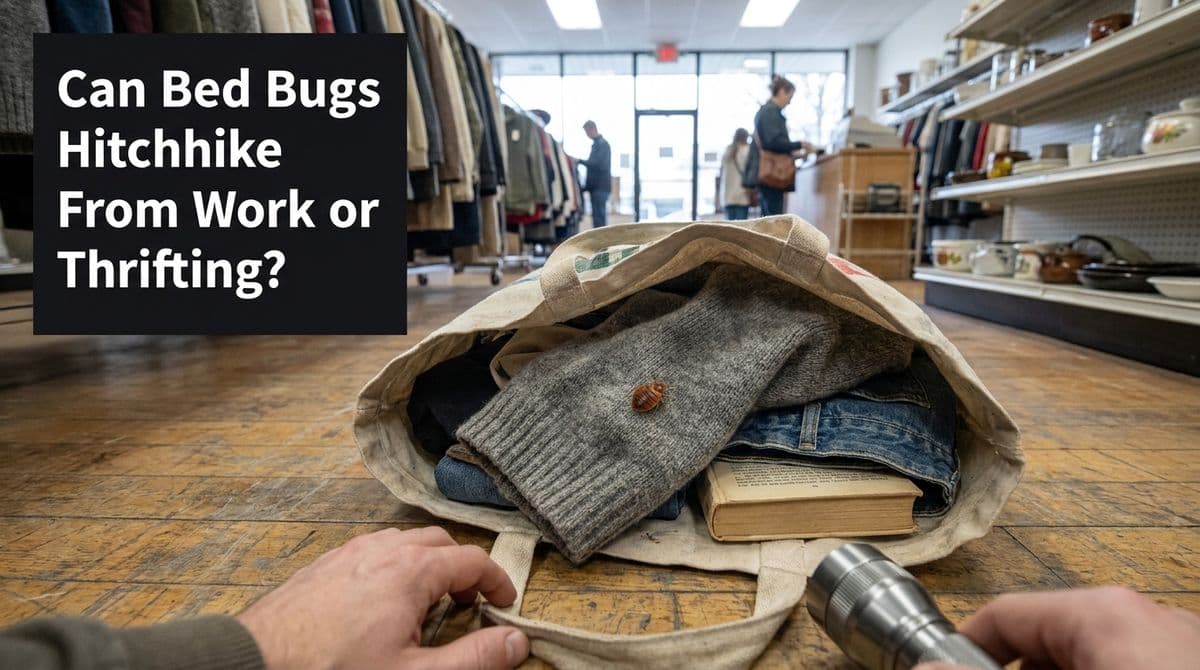
- Thrift stores and secondhand items: Couches, chairs, mattresses, bed frames, and even fabric-covered items can carry live bugs or eggs.
- Moving and storage: Shared moving trucks, storage units, or borrowed furniture are all potential sources.
The tough part is that bed bugs are small, fast, and mostly active at night. Many people never see the bugs themselves — just the signs they leave behind.
Why One Bed Has Bugs and the Other Looks Clean
Laura was confused: her husband’s bed had bed bugs, but her own bed looked spotless. She uses white sheets and checks them regularly, and she hadn’t seen a single spot.
This kind of uneven activity is actually very common in early infestations. A few reasons why:
- The bugs follow the person who brought them home. If eggs or live bugs came home on your clothing or work bag, they usually establish closest to where those items are set down or where you first sleep.
- They tend to focus on one “primary” sleeping area at first. Bed bugs prefer to stay close to a reliable food source (us), so they cluster near the bed they’re feeding on.
- Light-colored sheets help — but they don’t guarantee you’ll see everything. You may still miss tiny nymphs or faint spots, especially if the population is just starting.
The good news for Laura — and for you, if you’re in a similar situation — is that catching bed bugs in just one room or one bed early usually makes treatment simpler and more affordable.
What You Can Do Right Away If You Suspect Bed Bugs
While we always recommend a professional inspection, there are smart steps you can take before we even arrive. Here’s what we told Laura to focus on (and what we tell most homeowners):
1. Confirm — or At Least Narrow Down — the Problem
Check the beds and furniture carefully, especially in the room where you’ve seen activity:
- Look along mattress seams, tufts, and labels
- Check the headboard, bed frame, and screw holes
- Inspect the edges of box springs and the area where the bed meets the wall
You’re looking for:
- Live bugs (brown, oval, about the size of an apple seed when adult)
- Small dark spots (droppings) that smear when dampened
- Light-colored shed skins or tiny cream-colored eggs
2. Avoid Spreading Them by Accident
It’s tempting to start dragging furniture out to the curb or hauling things from room to room, but that can actually spread bed bugs further. Instead:
- Leave beds and major furniture where they are until an inspection.
- Do not move items from an infested room into “clean” rooms.
- Keep laundry from that room separate in sealed plastic bags.
3. Use Your Washer and Dryer Wisely
Heat is one of your best tools right away. For bedding and washable clothing from the affected room:
- Bag items in the room, then carry the sealed bag to the laundry area.
- Empty the bag directly into the washer, then discard the bag outside.
- Wash on the hottest setting that’s safe for the fabric.
- Dry on high heat for at least 30 minutes; heat is what kills bed bugs and eggs.
How to Reduce Your Risk From Work, Thrift Stores, and Apartments
Because Laura’s main concern was, “Did my husband bring bed bugs home from work?” we walked her through a few simple habits that can dramatically reduce the risk — and these apply to anyone who works around other people or shops secondhand.
Coming Home From Work
- Have a “drop zone.” Choose one spot (like a laundry room) where work boots, jackets, and bags always go.
- Don’t toss work clothes on the bed or couch. Put them straight into a hamper or directly into the washer.
- Use a hot dryer cycle. If you’re worried about an exposure, 30+ minutes on high heat can give you peace of mind.
Thrift Stores and Secondhand Items
- Avoid used mattresses and box springs. They’re one of the highest-risk items.
- Inspect upholstered furniture (sofas, recliners, chairs) thoroughly along seams, under cushions, and in cracks.
- Heat-treat or wash what you can. Clothing and linens should go through a hot wash and dry before use.
Living in or Visiting Apartments
- Be cautious with shared laundry rooms. Use clean plastic bags for transporting your items.
- Keep beds pulled a few inches from the wall and avoid letting bedding drape onto the floor.
- Report any suspected bed bug activity to management promptly if you’re a tenant.
When to Call a Professional
With Laura, we scheduled a free evaluation so we could see exactly what was going on before talking costs or treatment plans. That’s important, because price depends on:
- How many rooms are affected
- How long the bugs have been present
- Whether they’ve spread to furniture beyond the bed
If you’ve:
- Seen live bugs or suspicious spots on bedding or furniture, or
- Had multiple unexplained bites at night, especially in one room
then it’s time to bring in a professional. The earlier we’re called, the simpler the treatment usually is.
Bed bugs are stressful, but you’re not powerless — and you’re definitely not alone. With a quick inspection and a solid plan, we can help you get your home back to normal and put the “hitchhikers” out of business.