How to Get Rid of Crickets in Your Walls (Without Losing Your Mind)
Crickets chirping in your walls driving you crazy? Learn why they sound so loud, what treatments really work, and when it’s time to call in a pro.
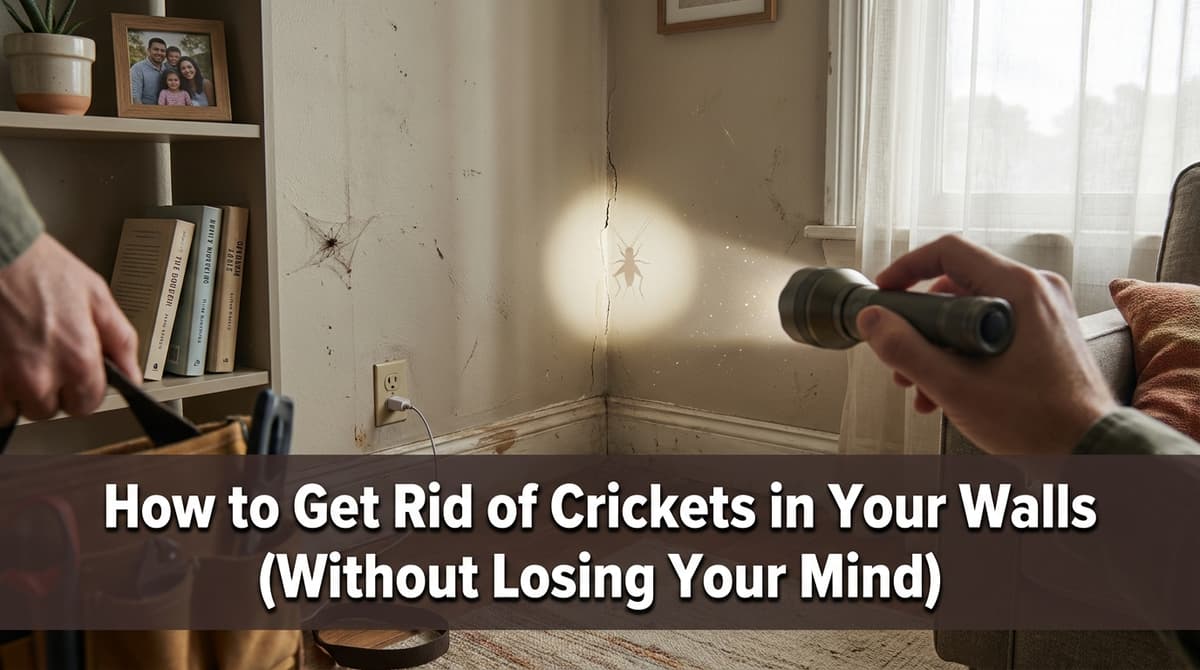
“Crickets in the walls” – what’s really going on?
We recently got a call from a customer — let’s call him Ryan — who was absolutely at his wits’ end with crickets. He’d already had an interior and exterior spray for crickets a few weeks earlier, but when he sat in his living room at night, all he could hear was that constant chirp… chirp… chirp….
Ryan told us he’d moved a small bar cabinet away from the wall and noticed a gap where the tile met the wall. The grout had cracked a bit, leaving a thin opening. When he put his ear up to the wall, the noise was clearly inside the wall or right along that grout gap. No visible crickets to squish, just sound coming from what felt like a hidden cricket universe.
If that sounds familiar, you’re not alone. Crickets in (or near) walls are a super common complaint, and they can truly make you feel like you’re losing your mind. Let’s talk about what’s really happening, what treatments work, how long they take, and when it’s time to call a pro.
Why crickets seem louder in walls and grout gaps
Crickets aren’t just loud — your home can actually amplify them. A few key reasons they sound like they’re living inside your walls:
- They’re using the wall as a soundboard. Crickets chirp by rubbing their wings together. When they sit in tight spaces — like gaps along baseboards, grout cracks, or wall voids — the sound bounces around and gets amplified.
- They prefer dark, tight, protected spaces. That little grout gap Ryan found is perfect: narrow, hidden, and slightly cooler. Crickets love those transition lines where floor meets wall.
- Sound travels through framing and drywall. Even if the cricket is under the baseboard or in a gap at the slab’s edge, it can sound like it’s deep in the wall cavity because wood and drywall carry vibration.
Most of the time, they’re not nesting in the middle of your wall like a movie scene. They’re hugging the edges — foundation cracks, gaps where tile meets wall, expansion joints, and around plumbing or electrical penetrations.
How crickets are getting into your home
Crickets usually start outside and work their way in when they find:
- Gaps at doors and garage thresholds (worn weatherstripping, torn door sweeps).
- Cracks in slab or foundation that meet interior finishes like tile or baseboards.
- Openings around pipes and cables that pass through walls and floors.
- Weep holes and vents without proper screening.
Once inside, they’ll settle into the smallest cracks and crevices — just like that broken grout line Ryan pointed out on his call.
What professional cricket treatments can really do
When we come out to a home like Ryan’s, we’re looking at three things: where crickets are coming from, where they’re hiding, and how to keep new ones from moving in. A realistic professional plan often includes:
1. Exterior treatments
This is your main line of defense. We typically:
- Apply a residual insecticide barrier around the foundation, entry doors, and low exterior walls.
- Treat crack-and-crevice areas where crickets hide: expansion joints, around AC pads, under thresholds, around weep holes.
- Inspect for landscape and moisture conditions that attract crickets (thick mulch, clutter, damp areas).
2. Interior treatments
Inside, we focus on where you hear and see the activity:
- Careful crack and crevice treatment along baseboards, behind cabinets, and around plumbing/electrical penetrations.
- Targeted treatment near noisy grout gaps or wall-floor joints (like Ryan’s tile line behind his bar cabinet).
- Occasional use of baits or sticky monitors in hidden areas to catch and confirm activity.
We’re not usually opening walls, but we can get product into many of the exact voids where crickets like to sit and chirp.
3. Locating “nests” vs. realistic expectations
Customers often ask us to find the “cricket nest.” Crickets don’t build big, obvious nests the way some other pests do. What we’re really doing is:
- Listening and looking for hot spots of activity (like that one loud wall).
- Checking entry points nearby (slab cracks, door gaps, utility penetrations).
- Focusing treatments and sealing efforts where activity and access line up.
We might not pull a giant clump of crickets out of the wall, but we can treat and cut off the places they’re using to get in and hang out.
How long should cricket treatments take to work?
This was one of Ryan’s biggest questions: “I had a spray a few weeks ago — how long should this take to work?” A few realistic timelines:
- First 24–72 hours: You may still hear crickets, and some may become more active as they contact the product.
- First 1–2 weeks: Activity should start to noticeably decrease if the treatment was thorough and conditions are favorable.
- 2–4 weeks: You should see a major drop in noise and sightings. If you’re still hearing the same intense chirping, it’s time for a follow-up visit.
Factors like heavy rains, lots of exterior harborage, or new crickets migrating in from neighboring areas can all slow perceived results. That’s why regular service and adjustments based on what we find on-site are so important.
What you can do between visits to reduce cricket noise
While we handle the professional side, there’s a lot you can do inside and outside to make your home less inviting to crickets and reduce that “in the walls” chorus.
Outside the home
- Reduce clutter and thick ground cover near the foundation (wood piles, dense mulch, stacked items).
- Trim vegetation away from exterior walls so plants aren’t touching the structure.
- Adjust exterior lighting: use yellow “bug” bulbs or motion-activated lights to reduce what’s attracting crickets at night.
- Seal obvious gaps at doors, garage doors, and low wall penetrations with weatherstripping, door sweeps, and appropriate sealants.
Inside the home
- Seal small gaps where you can safely do so — like cracked grout lines along floors and baseboards. A good quality caulk or grout repair product can block their favorite sound chambers.
- Move furniture periodically (like Ryan’s bar cabinet) to expose hidden areas for cleaning and inspection.
- Reduce clutter in storage areas where crickets could hide (closets, utility rooms, garages).
- Use sticky monitors in out-of-the-way areas to catch stragglers and help identify where they’re most active.
When it’s time to call a pro
If you’ve tried the DIY route, sealed what you can, and you’re still hearing that relentless chirping night after night — especially if it sounds like it’s buried in walls or grout gaps — it’s time to bring in help.
Here’s when we recommend calling a professional:
- You’ve had persistent noise for more than 2–3 weeks after a treatment.
- The sound seems to be coming from inside walls or hard-to-reach crevices.
- You notice crickets in multiple rooms or along several walls.
- You just want your sanity — and your sleep — back.
When we visited Ryan after his call, our goal was the same as it is with every customer: track down the most likely entry points, treat the hidden harborages as precisely as possible, and give him a clear picture of what to expect over the coming days. With the right combination of treatment and sealing, those “crickets in the walls” went from a nightly headache to an occasional background sound he barely noticed.
If the chirping in your walls is driving you crazy, you don’t have to live with it. A thoughtful, targeted approach — both professional and DIY — can bring the volume way down.