How Bird Droppings and Pigeons Can Wreck Your Roof
Bird droppings and pigeon nests can stain, clog, and damage your roof. Learn how professional cleanup and prevention protect your home from leaks and costly repairs.
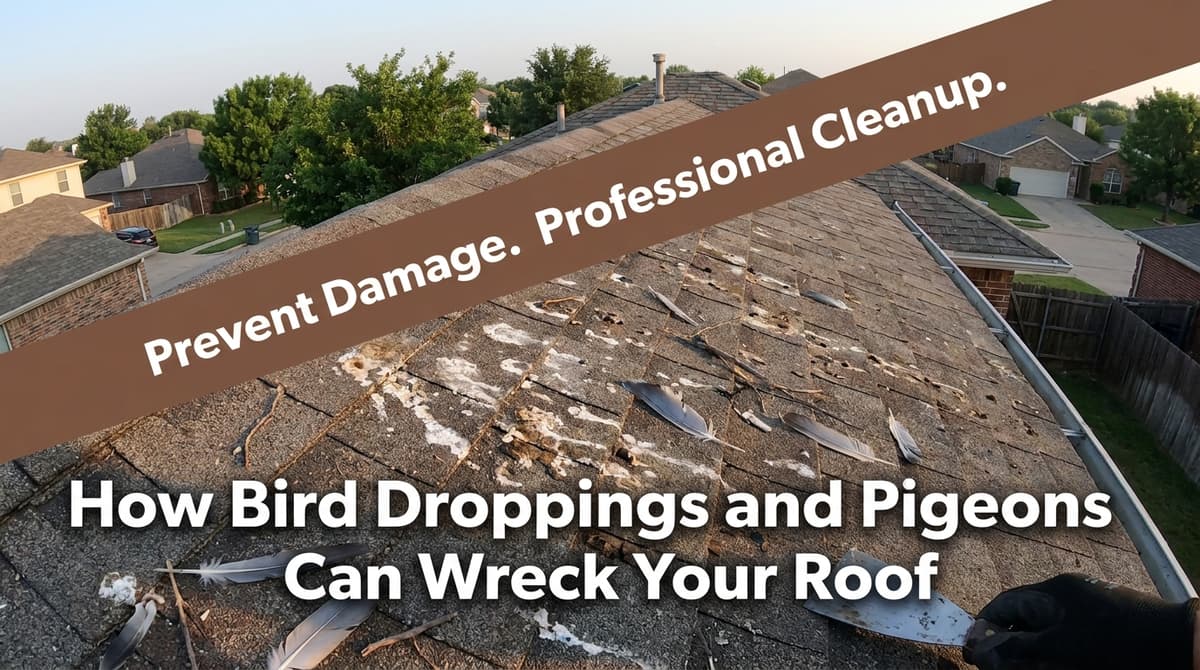
When Pigeons Lead to a Roof Leak
We recently got a call from a homeowner — let’s call him Eric — who was dealing with something we hear more often than you might think: a roof leak that turned out to be caused by pigeons.
Eric had already called a roofing company. The roofer climbed up, took a look, and told him the leak was likely from a huge buildup of bird droppings clogging key roof areas, plus pigeon activity around some vulnerable spots. The roofer recommended a professional pigeon cleanup and prevention plan, and that’s when Eric called us.
Situations like this are exactly why roofers and pest pros often work hand-in-hand. Pigeons aren’t just annoying — if they pick your roof as their hangout, they can slowly cause real damage.
How Bird Droppings Damage Roofs
When we got out to Eric’s place, we saw the same pattern we see on a lot of pigeon jobs: piles of droppings under favorite perching spots and thick build-up in corners and behind roof features. It doesn’t happen overnight, but over months and years bird waste can create several problems.
1. Acidic Droppings Eat Away at Materials
Pigeon droppings are highly acidic. Left in place, they can:
- Etch and stain roof tiles, shingles, and metal
- Accelerate deterioration of protective roof coatings
- Corrode metal flashing, vents, and gutters
We often see this along ridge lines, around AC units, at the base of satellite dishes, and on parapet walls — anywhere pigeons like to perch and “hang out.” Over time, those weakened areas become prime spots for water to find its way in.
2. Clogged Drainage Causes Leaks
The other big problem, and the one Eric was facing, is that droppings, feathers, and nesting materials can clog water paths. When those materials collect in valleys, behind skylights, or in gutters and scuppers, water backs up instead of flowing off the roof.
Once water pools, it starts seeping under shingles, tiles, or membrane seams. That’s usually when homeowners finally notice something is wrong — a stain on the ceiling, a drip in a heavy rain — but by then the mess on the roof has been building for a long time.
3. Nesting in Hidden Gaps
Pigeons love sheltered spaces. We regularly find nests:
- Under solar panels
- In roof overhangs and eaves
- Behind decorative roof features
- In open gaps around vents and utility lines
Those nests trap moisture and debris, attract insects, and give other pests a foothold. In some cases, nesting materials can even block attic vents and reduce ventilation, which is bad news for your roof and your energy bills.
Why DIY Cleanup Can Be Risky
Many homeowners ask us, “Can we just hose it off ourselves?” We understand the instinct to save money, but there are a few things to think through first.
Health risks: Dry bird droppings can carry bacteria and fungal spores. When they’re disturbed, particles can become airborne and be inhaled. That’s why we always use protective gear and safe cleanup methods.
Roof damage: A high-pressure power washer in the wrong hands can force water under shingles, crack tiles, or strip protective granules. We often see roofs that were accidentally damaged during a well-intentioned DIY clean.
Working at height: Climbing onto a sloped, dirty, or tile roof is always a fall risk, even for people who are comfortable on ladders.
For bigger pigeon problems — especially when a roofer has already identified damage or leaks — professional cleanup is usually the safest and most cost-effective route.
What Our Professional Pigeon Cleanup Involves
When we scheduled Eric’s pigeon evaluation, we set him up for an on-site visit and quote. That’s always our first step on every job for our team: see exactly what’s happening on the roof before we recommend a plan.
Step 1: Full Inspection
During an evaluation, we:
- Identify where pigeons are roosting, nesting, and entering
- Check valleys, gutters, and around roof penetrations for buildup
- Look for droppings or nests under AC units and solar panels
- Note any areas where bird activity may have contributed to leaks
We also talk with the roofing company (if one is involved) so that the cleanup and the roof repairs work together, not against each other.
Step 2: Safe Cleanup and Nest Removal
All of our pigeon jobs include thorough cleanup. That typically means:
- Carefully removing nests, eggs, and heavy droppings
- Bagging and disposing of waste according to local guidelines
- Using appropriate cleaners to break down and sanitize contaminated areas
- Rinsing and clearing gutters, valleys, and drains so water can flow again
Our goal is to leave the roof as clean and safe as possible so your roofer can clearly see what needs repairing.
Prevention: Keeping Pigeons from Coming Back
Cleanup alone won’t solve a pigeon problem for long. If the roof is still comfortable and convenient, they’ll be back. That’s why every pigeon service we perform includes a prevention plan tailored to the home.
Common Bird-Proofing Options
Depending on the roof and where birds are spending their time, we may recommend:
- Screening & mesh to close off gaps, attic vents, and under-solar-panel spaces
- Bird netting to block off larger areas where pigeons like to roost or nest
- Wire systems along ledges and ridges to make landing uncomfortable
- Spikes or deterrent strips on narrow ledges where birds line up and perch
For Eric, the roofer had suggested netting in a couple of key spots and some exclusion work around roof features that pigeons were using as a shelter. That’s very typical — we combine multiple tools to make the roof far less attractive to birds, without hurting them.
Simple Habits That Help
There are a few things homeowners can do on their own to reduce pigeon activity:
- Avoid feeding birds anywhere near the house
- Keep pet food and open trash secured
- Trim back branches that overhang the roof, when possible
- Schedule regular roof checks, especially after big storms
These steps won’t replace professional exclusion on a serious pigeon problem, but they do help support the work we do on the roof.
Worried About Birds Damaging Your Roof?
If a roofer has mentioned pigeon issues, or you’re seeing droppings and nests building up on your home, it’s worth addressing sooner rather than later. The longer the mess sits, the higher the chance of stains, damage, and leaks.
We’re always happy to come out for a pigeon evaluation and quote, walk through what we see, and put together a cleanup and prevention plan that fits your roof and your budget.
Whether you’re already dealing with a leak or just starting to notice more bird activity, a little proactive pigeon control can go a long way toward protecting your roof — and your peace of mind.