How to Humanely Keep Pigeons Out of Your Home’s Eaves
Pigeons nesting in your eaves? Learn how we humanely remove them, protect your roof with screening, and keep them from coming back for good.
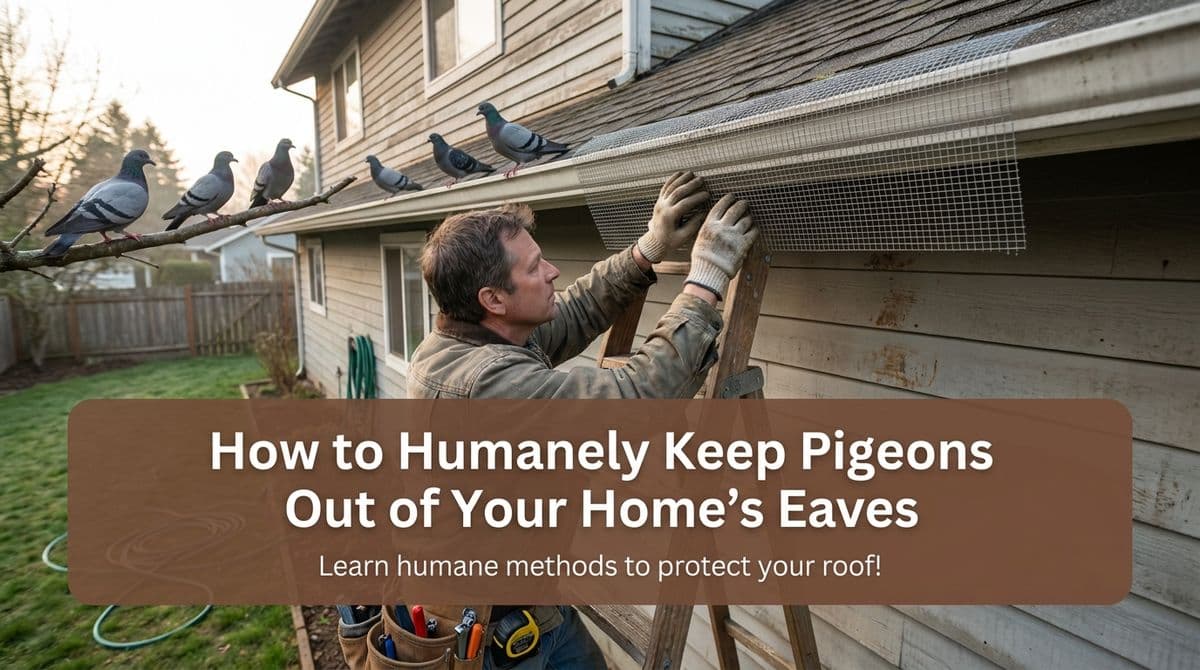
A Call About Pigeons in the Eaves
We recently got a call from a new homeowner — let’s call him Mark — who had just moved into a place very similar to many of the homes we see in our area. He told us there were a couple of pigeons nesting up in the small eaves of his home and dropping poop all over the driveway. On top of being messy, he was worried about damage and health concerns, and he also wanted to make sure any solution was humane.
Mark’s big question was simple: could we encourage the pigeons to leave and then install screening in those eave areas, without harming his roof or the birds? That’s exactly the kind of situation we’re called out for all the time, so in this post, we’ll walk you through how we handle it — from humane deterrents to screening and long-term prevention.
Why Pigeons Love Your Eaves (and Why That’s a Problem)
Eaves are perfect pigeon real estate: they’re shaded, protected from wind and rain, and high off the ground. To a pigeon, that little gap under your roofline feels like a safe nesting cavity.
The problem is what comes with that “cozy” nesting spot:
- Droppings everywhere – driveways, walkways, and patios get coated quickly.
- Health concerns – pigeon droppings can harbor bacteria and fungi that you don’t want tracked into your home.
- Odor and staining – acidic droppings can stain concrete and degrade some roofing materials over time.
- Nesting debris – feathers, twigs, and droppings can clog small drainage areas and create a fire risk near lights.
The key is to get pigeons out and keep them from coming back, without damaging your roof or using harsh methods.
Step 1: Evaluate Before You Act
When Mark called, he asked about quotes right away. Our answer was the same one we give everyone: we like to see the situation first. That’s why we scheduled a free evaluation for a specific time window, just like we did on that call.
During an on-site evaluation, here’s what we typically look at:
- Where exactly they’re nesting – only in eaves, or also on ledges, under solar panels, or on roof peaks?
- How many birds – a pair of pigeons versus a full flock requires different levels of control.
- Condition of the area – droppings buildup, damage, or clogged drainage.
- Access points – gaps and openings pigeons are using to get into eaves or other voids.
That inspection helps us design a plan that’s humane, effective, and safe for your roof structure.
Step 2: Humane Ways to Encourage Pigeons to Leave
Before any screening goes up, pigeons need to be gone. We rely on humane deterrents and timing rather than anything harmful. Some of the methods we often recommend include:
- Timing work between nesting cycles – whenever possible, we avoid sealing areas if there are active nests with eggs or chicks present.
- Noise and disturbance – regular human activity and gentle disturbance (like working in the area) can make the site less attractive.
- Light and movement – reflective tape, moving decoys, or temporary visual deterrents can help encourage pigeons to seek a quieter spot.
Once the pigeons have moved off the nest site (or once it’s safe and legal to remove inactive nesting materials), we carefully clear the area so it’s ready for screening.
Step 3: Cleaning and Protecting the Area
After pigeons leave, you’re usually left with droppings and nesting debris. We always recommend a proper cleanup before installing any permanent solution.
Typical cleanup steps include:
- Safe removal of nests – using protective gear to remove old nesting materials and loose debris.
- Dropping cleanup – scraping and carefully collecting droppings to avoid dispersing dust.
- Disinfection – treating affected surfaces with appropriate cleaners or disinfectants.
Professional cleanup helps reduce odors and health risks and gives screening materials a clean surface to adhere to, which improves long-term performance.
Step 4: Installing Screening in the Eaves (Without Roof Damage)
On Mark’s call, he specifically mentioned “little fences” in the eaves. What we actually use is a combination of bird screening and exclusion materials designed for this kind of work.
When we install screening, we focus on:
- Proper fit – custom-cut screens or mesh that cover openings fully, so pigeons can’t squeeze back in.
- Roof-safe attachment – fasteners and methods that don’t compromise shingles, underlayment, or fascia boards.
- Durable materials – UV- and weather-resistant products that stand up to heat, wind, and sun.
Done right, the screening is low-visibility from the ground, doesn’t trap birds inside, and doesn’t void roofing warranties. That’s why an in-person evaluation is so important: every roofline and eave is a little different.
Other Humane Deterrents We May Recommend
In addition to eave screening, we sometimes pair other humane deterrents with the work, especially if pigeons are using nearby areas as perches:
- Angled covers or slopes on ledges to make perching uncomfortable.
- Bird spikes on select beams or signs (used carefully and only where appropriate).
- Netting for larger voids, such as carports or open rafters.
The goal is always the same: make your home less attractive to pigeons so they naturally relocate to a more suitable site, without harming them.
Long-Term Prevention Tips for Homeowners
After we finish a job like Mark’s, we always leave homeowners with a few maintenance tips to keep pigeons from coming back:
- Eliminate food sources – don’t leave pet food outdoors and clean up spilled birdseed.
- Trim nearby trees – reduce overhanging branches that give pigeons easy “staging areas.”
- Inspect yearly – walk around the home at least once a year and look for new gaps, damaged screens, or high-traffic roosting spots.
- Address small problems early – one or two pigeons are much easier to deter than a whole flock.
With a little ongoing attention and the right screening in place, most homeowners can keep their eaves pigeon-free for the long haul.
Need Help with Pigeons in Your Eaves?
If you’re dealing with pigeons nesting in your home’s eaves, you don’t have to choose between protecting your roof and treating the birds humanely. We can inspect the situation, walk you through your options, and provide a quote for professional cleanup, screening, and long-term prevention.
That’s exactly what we arranged for Mark when he called in asking for a pigeon evaluation and quote — and it’s the same step-by-step, humane approach we bring to every pigeon job we do.