When Your Neighbor’s Pigeon Problem Becomes Yours
Neighbor’s pigeons taking over your roof? Learn how we protect roofs, eaves, and solar panels from roosting birds with screening, tension wire, and smart exclusion.
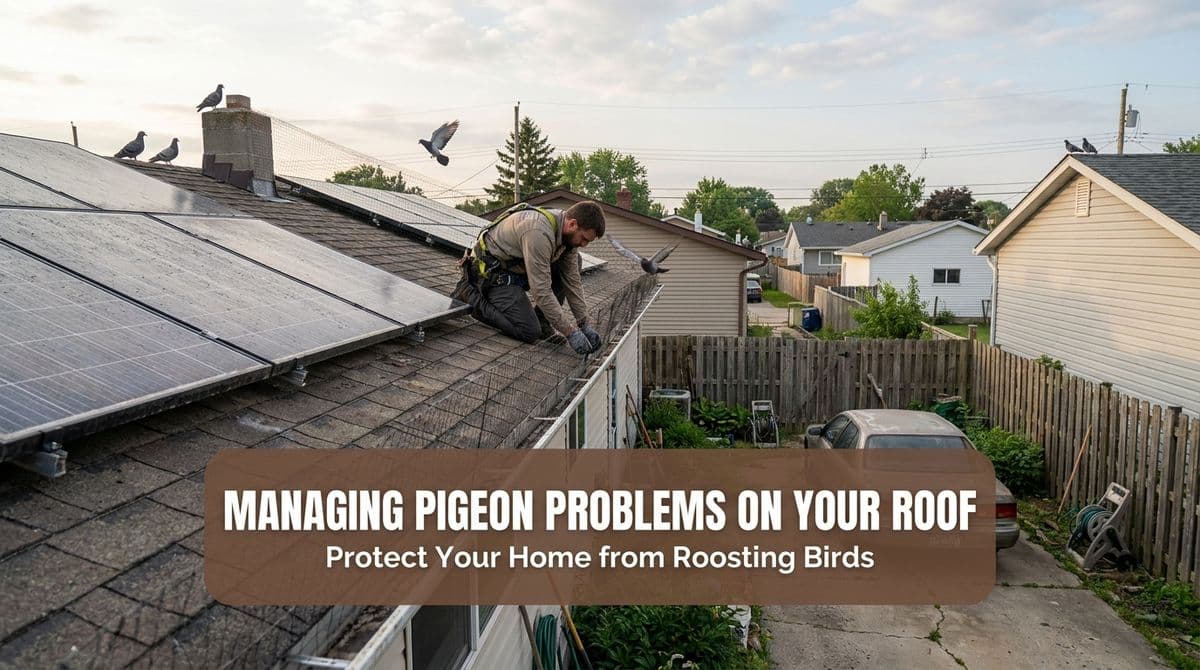
When Your Neighbor’s Pigeons Move In: A Real-Life Roof Story
We recently got a call from a homeowner — let’s call her Sarah — who lives in a Mesa neighborhood where just about every other house has solar panels. Her neighbor had us out to install pigeon control around their solar array, and it worked exactly like it was supposed to.
There was just one problem: once we closed off the neighbor’s roof, their pigeons turned into Sarah’s pigeons.
“It’s a real gross disaster,” she told us. “We don’t have solar, but they’re getting into little spots on the house and trying to nest in the eaves. We’ve tried to control it and it doesn’t seem to help.”
If that sounds familiar, you’re not alone. When one house finally pigeon-proofs, the birds don’t disappear — they just go shopping for the next easy roof. That’s where we come in.
Why Your Neighbor’s Pigeon Problem Becomes Yours
Pigeons are creatures of habit. Once they’ve found a neighborhood with good food and safe roosting spots, they tend to stay in the area. When we block them from their favorite hangout (like your neighbor’s solar panels), they look for the next best thing:
- Open eaves and gaps where they can tuck in and nest
- Flat or wide ledges on the roofline, parapets, and chimneys
- Under solar panels or satellite dishes
- Shaded, protected spots near HVAC units or vents
In Sarah’s case, her house had a few small architectural ledges and some open spots under the eaves — perfect real estate for a flock that just lost their old address.
Why Roosting Birds Are More Than Just Annoying
Beyond the mess and constant cooing, pigeons can do real damage to your home:
- Roof damage: Droppings are acidic and can deteriorate shingles, tile, and sealants over time.
- Clogged gutters and drains: Nesting material and feathers block water flow and can cause leaks.
- Eave and stucco damage: Birds squeeze into small gaps, breaking screens and damaging wood or stucco as they go.
- Health concerns: Accumulated droppings can harbor bacteria, fungi, and parasites.
On homes with solar, pigeons love the protected space under the panels. That can lead to wiring damage, hot nests right on your roof, and reduced panel efficiency from droppings.
How We Actually Bird-Proof a Home (Not Just “Scare Them Off”)
When Sarah called, she wasn’t sure what she needed — just that whatever she had tried wasn’t working. That’s exactly why we always start with a free on-site evaluation and quote.
Here’s what we typically look at and recommend:
1. Eaves and Nesting Gaps
We walk the exterior and roofline to find the “little spots” pigeons love: open eaves, gaps where roof meets wall, decorative beams, and overhangs. For these areas, we usually recommend:
- Screening off eaves and gaps with durable, rust-resistant mesh so birds can’t get in to nest.
- Sealing access points where practical, without blocking necessary ventilation.
Done correctly, these screens are discreet, effective, and built to withstand our weather.
2. Ledges, Rooflines, and Favorite Perches
If pigeons are loafing on ledges, parapets, or roof edges, we look at physical deterrents that make those spots uncomfortable — but not harmful — to land on. Common options include:
- Tension wire systems: Thin, spring-tensioned wires installed along ledges. They’re low-profile, effective, and much less visible than bulky options.
- Other ledge deterrents tailored to the architecture, especially if tension wire isn’t feasible in certain spots.
The goal is simple: turn your home from “best seat in the house” into “not worth the trouble.”
3. Solar Panels and Roof Equipment
Even if you don’t have solar, your neighbors might — and that’s often how the problem starts. When we’re working on homes with panels, we typically:
- Install solar panel bird guards or screening around the perimeter of the array.
- Clear out old nests and droppings before installing any barriers.
- Check for visible wiring or roof damage and recommend follow-up if needed.
Once the panels are sealed up, birds will start scouting nearby roofs — exactly what happened in Sarah’s neighborhood, and why it’s smart to be proactive.
What You Can Do Before We Arrive
While professional exclusion is the long-term solution, there are a few things homeowners can do right away:
- Remove food and water sources: Don’t feed birds, and keep pet food, open trash, and standing water to a minimum outdoors.
- Clean small messes safely: Light droppings can be carefully cleaned using gloves, a mask, and soapy water. Avoid dry sweeping, which can send dust airborne.
- Note their patterns: Pay attention to where and when pigeons gather or nest — that helps us target the right spots during your evaluation.
DIY spikes, fake owls, and noisemakers might give you a short break, but pigeons are smart and quickly adapt. Long-term success almost always comes from physically excluding them from their favorite spots.
How Our Pigeon Evaluation Works
When Sarah set her appointment, she asked, “Can someone just come out and tell me what we can put on our house and what it might cost?” That’s exactly what we do:
- Schedule a visit at a time that works for you.
- Inspect your roof, eaves, and any solar for current activity, damage, and potential nesting sites.
- Explain a game plan in plain language — what we recommend, why, and what’s optional vs. essential.
- Provide a written quote so you can decide if and when you want to move forward.
You’re never locked into anything just for having us out. The goal is to give you clear options so your neighbor’s pigeon problem doesn’t become your long-term headache.
Ready to Keep the Birds Off Your Roof?
If you’re seeing more pigeons on your roofline, under your eaves, or around your solar panels — especially after a neighbor has had work done — that’s the perfect time to act. Once they settle in and start nesting, the cleanup and repairs only get more involved.
We’re happy to come out, take a look, and build a customized plan to protect your roof, eaves, and solar from roosting birds — so your home doesn’t become the neighborhood pigeon hangout.