Rodents Chewing Car Wires: Why It Happens & How to Stop It
Rodents chewing car wires? Learn why citrus trees, bushes, and parked cars attract them, how we place bait boxes, and what you can do to protect your yard and vehicles.
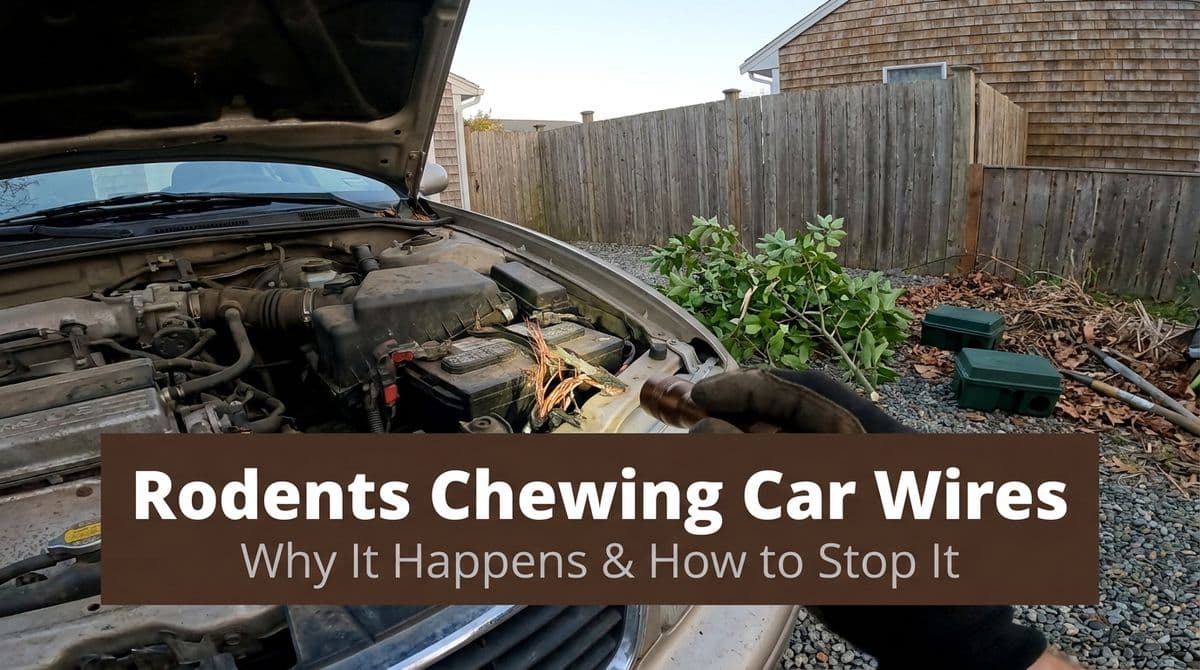
Rodents Chewing Car Wires: Why It Happens
We recently got a call from a customer — let’s call her Laura — who was pretty frustrated. She and her husband had just gotten their car back from the shop, and the mechanic told them some type of rodent had chewed through the wiring. The car was parked outside right by their RV gate, and this wasn’t the first time they’d heard of this happening in their neighborhood.
When we pulled up their account, we saw they already had exterior bait boxes on the property. But as we talked through where the damage happened and what was growing in their yard, the picture got clearer: a block wall, a dense bush by the gate, and four fruit trees (a large orange and grapefruit, plus smaller lime and lemon trees) all on the same side as the parked car.
If that sounds a lot like your setup, you’re not alone. Rodents and parked vehicles are, unfortunately, a very common combination.
Why Rodents Are Attracted to Parked Cars
From a rodent’s point of view, your car is a safe, warm, protected hiding spot. Modern vehicles, with tight engine bays and lots of plastic covers, feel like cozy little caves. Add in soft insulation and soy-based wiring coatings that can smell and taste a bit like food, and it’s easy to see why they chew.
But the real key is what’s around the car. In Laura’s case, the car was parked right next to:
- A thick bush along the block wall
- An RV gate (a common entry point from alleys or easements)
- Several citrus trees dropping fruit on the ground
To rodents, that combination is perfect: cover (the bush), access (the gate/wall line), and food (the fruit). The car just becomes another “den” in the middle of their feeding area.
Fruit Trees, Bushes, and Other Yard Features That Attract Rodents
We get this question a lot: “Do they really hang out around the fruit trees?” The short answer: yes. Citrus and other fruit trees are a big draw for rodents, especially if the fruit is dropping and staying on the ground.
Here are some specific features that tend to invite rodent activity:
- Citrus trees (orange, grapefruit, lemon, lime, etc.) with fallen or low-hanging fruit
- Dense bushes or shrubs near walls, fences, or gates
- Block walls that provide a protected “highway” along the property line
- Garages with easy access under doors or through small gaps
- Stored items (firewood, boxes, yard tools) piled up near vegetation
If you’re noticing hollowed-out citrus or small gnaw marks on fruit, that’s a major clue that rodents are feeding in that area and likely nesting nearby.
Common Signs of Rodents Around Cars and Fruit Trees
Laura mentioned seeing limes on the ground that were eaten out — what we often see is fruit that looks “scooped” or hollowed from one side, leaving a shell. That’s classic rodent feeding behavior.
Other signs to watch for near your vehicles and yard include:
- Chewed or frayed wiring under the hood or near wheel wells
- Nesting material (shredded insulation, leaves, paper) in the engine bay or air filter compartment
- Droppings on the driveway, in the garage, or under fruit trees
- Grease rub marks along walls, pipes, or beams where they travel regularly
- Scratching sounds from the garage or exterior walls at night
If your mechanic tells you wiring has been chewed and you’re seeing fruit damage or droppings in the same part of the yard, it’s a safe bet that rodents are moving between those food sources and your car.
How We Place Exterior Bait Boxes and Traps
When Laura called, her main question was: “Can we get some traps put in that area by the gate?” We looked up her account and saw existing bait boxes behind the gate leading into the backyard, but nothing in the specific spots where the car was parked and the fruit trees were dropping.
For a setup like hers, our technician recommended three additional bait stations:
- One by the bush on the outside of the gate, where the rodents were likely hiding
- One right outside the RV gate along the block wall, to intercept rodents traveling that route
- One in the garage, as a backup in case they made it indoors
We typically place exterior bait boxes and traps in strategic locations such as:
- Along walls and fences (rodents love to travel with one side of their body against a surface)
- Near gates and entry points where they move between yards or alleys
- Next to dense vegetation like bushes, hedges, or ivy
- Close to garages and sheds, but out of reach of kids and pets
The goal is to meet the rodents where they already travel, not to lure them into new areas. That’s why having a technician walk the property and follow the “story” — fruit damage, hiding spots, travel routes — is so important.
Practical Prevention Tips for Yards with Fruit Trees
Traps and bait boxes are one part of the solution. The other part is making your yard and vehicles less attractive. If you have citrus or other fruit trees, here are some practical steps you can take:
- Pick up fallen fruit regularly. Don’t let it sit on the ground — that’s an open buffet.
- Harvest ripe fruit promptly. The longer it hangs, the more likely it is to attract pests.
- Thin and trim dense bushes near walls, gates, and driveways so rodents have less cover.
- Store vehicles away from heavy vegetation when possible — even shifting a car a few feet away from a bush or tree line can help.
- Seal gaps into the garage around doors, pipes, and utility lines with appropriate materials.
- Keep the garage tidy so you can spot droppings or nesting material early.
- Pop the hood periodically on vehicles that sit for long periods and look for early signs of chewing or nesting.
None of these steps alone will solve a heavy infestation, but together — combined with professionally placed bait boxes and ongoing monitoring — they dramatically lower your risk of surprise repair bills.
When to Call in a Professional
If you’re seeing multiple signs — chewed car wires, hollowed-out fruit, droppings near gates or walls — it’s time to bring in help. A good pest control technician will:
- Walk your property and identify travel routes and nesting spots
- Place bait boxes or traps in safe, strategic locations
- Adjust placement around gates, walls, garages, and vegetation as activity changes
- Work with you on a simple, realistic cleanup and pruning plan
With Laura, we scheduled a visit for the next afternoon, added the extra bait stations by the bush, gate, and in the garage, and kept her monthly service the same since she was already on a bait program. That combination of targeted control and small habit changes around the yard goes a long way toward protecting both the vehicles and the fruit trees you’ve worked so hard to grow.
If you’re dealing with something similar — especially if you have citrus trees near where you park — don’t wait for the next repair bill to show up. A little prevention on the outside can save you a lot of trouble under the hood.