Scorpions in Arizona Homes: How to Protect Your Family
Scorpions in your Arizona home? Learn what attracts them indoors, how to protect kids and pets, and when it’s time to call a professional for real protection.
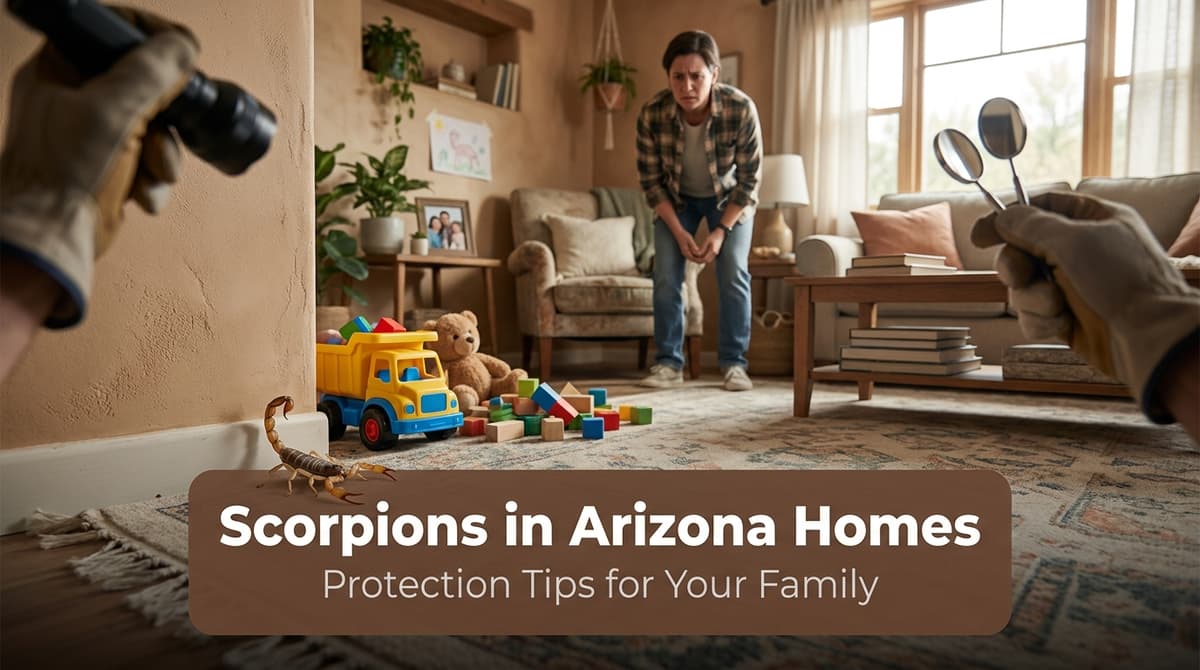
Scorpions in Arizona Homes: A Real Call That Hit Close to Home
We recently got a call from a customer — let's call her Julie — who had just found a scorpion crawling across her living room floor in Mesa. She works from home, has an infant who’s starting to crawl, and twin toddlers who love playing on the floor. You can imagine the panic in her voice when she said, “I just found a scorpion where my kids play.”
We had serviced the outside of her home earlier in the month, but the inside treatment had been missed because the family was out of town. That one small gap in coverage was enough for a scorpion to wander in — and that’s exactly the kind of situation we want to help you avoid.
If you live in Arizona, scorpions are a fact of life, but they don’t have to be a fact of your living room. Let’s walk through what attracts scorpions indoors, how to protect your family (especially kids and pets), and when it’s time to call in a professional.
Why Scorpions End Up Inside Arizona Homes
Scorpions don’t show up in your home by accident. They’re usually looking for one (or more) of three things: food, shelter, or moisture.
1. Other bugs are inviting them in
Scorpions are predators. If you’ve got crickets, roaches, spiders, or other small insects around your home, you’ve basically set out a buffet. Even if you don’t see many bugs, scorpions can find them in:
- Baseboards and wall voids
- Under appliances
- Dark corners of garages or storage rooms
- Foundation cracks and exterior gaps
That’s why general pest control is a key part of scorpion control. If we cut off their food source, your home becomes a lot less attractive.
2. Heat and drought push them indoors
Arizona’s extreme heat and dry conditions drive scorpions to look for cooler, more stable environments — like the inside of your home. They’ll often sneak in through:
- Gaps under doors and around weatherstripping
- Openings where pipes or cables enter the home
- Unsealed weep holes and foundation cracks
- Poorly sealed windows and sliding doors
In Julie’s case, the outside of her home was treated, but the interior hadn’t been done in a while. That made it easier for a scorpion to cross the treated perimeter and find a quiet corner indoors.
3. Clutter and yard conditions give them perfect hiding spots
Scorpions love tight, dark spaces. Outdoors, they hide under rocks, woodpiles, landscaping timbers, and dense vegetation. Indoors, they gravitate toward:
- Boxes and storage bins on the floor
- Cluttered closets and garages
- Loose items under beds and furniture
- Towels or clothes left on the ground
One of the first things we talk about with Arizona homeowners is reducing those harborage areas, both inside and outside.
How to Protect Your Family from Scorpions Indoors
When Julie mentioned her crawling infant and toddlers on the floor, our priority was clear: get scorpions out and keep them out. Here are steps we recommend to families in similar situations.
Seal up entry points
Think of scorpion control as a combination of pest control and home weatherproofing. A few practical sealing tips:
- Install or replace door sweeps on exterior doors so no light shows underneath.
- Caulk gaps around window frames, baseboards, and where pipes or cables enter the house.
- Screen or seal weep holes in brick or block construction with appropriate materials that still allow ventilation.
- Check garage doors for gaps along the sides and bottom; adjust or replace seals as needed.
Even small gaps can be enough for a scorpion to squeeze through.
Make your home less scorpion-friendly
Some simple habit changes can go a long way, especially when you have children and pets:
- Shake out shoes, towels, and bedding if they’ve been on the floor or stored in the garage.
- Avoid leaving clothes, blankets, or toys on the floor overnight where scorpions can hide underneath.
- Keep beds a few inches away from the wall and use bed skirts sparingly in high-scorpion areas.
- Declutter closets, garages, and under-bed storage to reduce hiding places.
These are the same tips we walked through with Julie, tailored around her kids’ play areas and sleeping spaces.
Control moisture and other pests
Scorpions are drawn to moisture as well as food. You can reduce their interest in your home by:
- Fixing leaky pipes, faucets, and outdoor hose bibs.
- Running bathroom fans after showers to reduce excess humidity.
- Keeping pet water bowls off the floor at night if you’re in a high-activity area.
- Maintaining a regular pest control program to cut down on the insects they feed on.
When Is It Time to Call a Professional?
Julie did exactly what we recommend: as soon as she saw a scorpion inside — especially with young kids in the house — she called and asked if we could come back sooner rather than later. We adjusted our route and scheduled her for the very next afternoon so we could treat both the exterior and the interior thoroughly.
In general, you should call a pro if:
- You see scorpions inside your home, even occasionally.
- You have young children, elderly family members, or pets in the home.
- You’re in a known scorpion-heavy neighborhood or near desert, canals, or open fields.
- DIY measures (glue boards, sealing, sprays) aren’t reducing sightings.
- You’re finding multiple scorpions a month indoors or in the yard.
A professional scorpion service typically includes:
- A thorough inspection of the property and key entry points.
- Targeted exterior treatment to create a protective perimeter.
- Interior treatment focused on baseboards, entryways, and high-risk rooms.
- Recommendations for sealing and habitat reduction tailored to your home.
Keeping Your Arizona Home Safe from Scorpions
For families like Julie’s, peace of mind matters as much as the actual treatment. In her case, we rescheduled quickly, retreated the outside, and “hit the inside really good,” focusing on the living areas where her kids crawl and play.
If you’re in Arizona and you’ve spotted scorpions in or around your home, you don’t have to live on edge every time your kids play on the floor. With a mix of sealing, smart habits, and consistent professional treatment, you can dramatically reduce scorpion activity and help keep your family safe.
And if you’re ever unsure whether you need a follow-up inside, the way Julie was, give us a call and ask. We’d rather come out a little early than have you find a scorpion in the living room.