Tiny Black Biting Bugs in Arizona Garages: Homeowner Guide
Getting tiny black bites in your Arizona garage? Learn what these bugs are, why they show up, and how interior, garage, and exterior treatments really fix them.
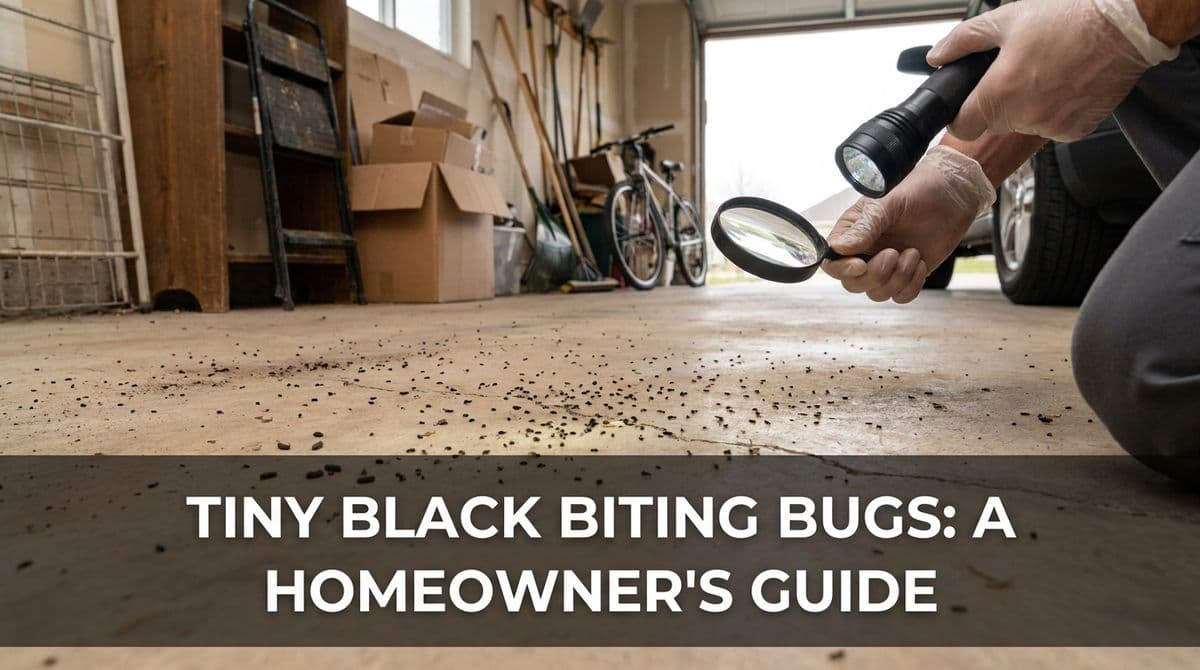
Tiny Black Biting Bugs in Arizona Garages: What’s Really Going On?
We recently got a call from a homeowner — let’s call her Linda — in an active adult community here in the Chandler/Sun Lakes area. She was frustrated, and honestly, a little miserable.
Linda told us she’d been paying for a pest service that only sprayed around the outside perimeter of her home. But inside her garage, she kept finding tiny black bugs that bit and left welts like mosquitoes. They were showing up in the garage and around the house, and she was wondering two things:
- What on earth are these little black biting bugs?
- Does anyone actually spray the garage and inside, not just the yard perimeter?
We hear some version of Linda’s question all the time, especially in Arizona neighborhoods where garages are used for storage, hobbies, or just as a main entry to the home. Let’s walk through what these pests usually are, why they show up, and what a thorough treatment really needs to include.
Common Tiny Black Biting Bugs in Arizona Garages
Every situation is a little different, and we always confirm on-site, but in Arizona garages and around the perimeter we often see:
- Biting midges (“no-see-ums”) – Tiny, gnat-like flies that can fit through screens and cracks. Their bites can leave red, itchy welts similar to mosquito bites.
- Fleas – Small, dark, jumping insects that bite ankles and lower legs. They’re often introduced by pets or wildlife (feral cats, rabbits, rodents).
- Certain small beetles – Most beetles don’t bite, but some species can nip if handled. More often, they’re a sign of moisture or stored product issues.
- Occasional invaders – Like springtails or psocids; they don’t usually bite, but homeowners sometimes mistake general skin irritation for bites.
To your eye, these may all just look like “little black bugs,” so a big part of our initial visit is identification. When we came out to Linda’s home, our tech started by looking at:
- Where the bugs were most active (bases of walls, near doors, around stored items)
- Any pet bedding, litter boxes, or signs of wildlife activity
- Moisture sources in and around the garage (water heaters, freezers, door thresholds, slab cracks)
Correct ID matters, because the treatment for fleas is very different from what we’d do for biting midges or other flying insects.
Why They Show Up in Garages and Around the House
Garages in Arizona are basically the perfect hangout for small biting pests:
- Temperature and shelter – Garages are warmer in winter, cooler in summer, and full of hiding places.
- Moisture – Water heaters, stored fridges/freezers, and even condensation can create damp spots bugs love.
- Access points – Gaps under garage doors, around weatherstripping, or at wall penetrations make easy entry routes.
- Hosts and food – Pets passing through, stored bird seed, or even trash cans can attract and sustain pest populations.
That’s why homeowners like Linda often say, “They’re all over our garage and around the house.” The bugs aren’t just hugging the foundation line outside — they’re using the garage as a base camp.
Why Perimeter-Only Spraying Often Isn’t Enough
Linda’s previous company did what many budget services do: a quick perimeter-only spray and out the door. That can help with some crawling insects, but it often falls short when:
- The pests are already established inside (garage, interior, attic).
- You’re dealing with biting insects that breed in hidden or sheltered areas.
- There are entry points that never get treated or sealed.
If we only spray the outside perimeter, we’re essentially protecting the castle walls and ignoring the pests that have already breached the gate. With Linda, that meant the bugs in the garage kept right on biting, even though the exterior had been treated.
What a Thorough Treatment Should Include
When we schedule an initial visit like the one Linda needed, we don’t just “hit the yard and go.” A proper treatment for tiny black biting bugs usually includes:
1. Interior Inspection and Targeted Treatment
Even if you’re mainly seeing bugs in the garage, we still recommend at least a quick interior look, because pests don’t respect your floor plan. This may include:
- Inspecting baseboards, window tracks, and door thresholds
- Treating cracks and crevices where insects hide or travel
- Checking pet areas, laundry rooms, and entryways
For biting insects, we often use targeted products in key areas rather than coating every surface. The goal is control with minimal disruption to your living space.
2. Thorough Garage Service
This is where Linda really needed help. A solid garage treatment usually includes:
- Inspecting around the garage door seal and side jambs
- Treating along baseboards, behind stored items (where accessible), and around equipment
- Addressing any standing water, damp cardboard, or clutter that provides shelter
In some cases, we’ll recommend decluttering or elevating boxes off the floor so we can reach more of the garage perimeter and reduce hiding spots.
3. Exterior and Perimeter Work (Done Right)
We still treat the exterior, but it’s more than a quick lap around the house:
- Applying a barrier around the foundation, entry doors, and windows
- Checking for conducive conditions (standing water, thick ground cover, debris piles)
- Looking for signs of rodents or wildlife that could be bringing fleas or other pests
The combination of interior + garage + exterior is what usually breaks the cycle, not just one of the three.
How Often Should You Treat? Monthly, Bi-Monthly, or Quarterly?
On Linda’s call, we walked her through the same options we offer every homeowner:
- Monthly – Best for severe or active biting insect problems, heavy pest pressure, or when we’re first getting an issue under control.
- Bi-monthly (every 2 months) – A good balance for most Arizona homes. It keeps a consistent barrier in place and allows us to respond quickly to seasonal changes.
- Quarterly (every 3 months) – Works well once things are under control and pest pressure is lighter. With us, quarterly doesn’t include free re-sprays between visits simply because the gap is longer.
We usually start a new customer with a more aggressive initial service, then adjust frequency down if the problem stays under control. Some of our customers start monthly, move to bi-monthly, and then settle into quarterly once they’re comfortable.
When to Call a Pest Control Pro
You can try a few DIY steps first:
- Seal gaps under and around your garage door
- Reduce clutter and store items in sealed plastic bins, not cardboard
- Fix any leaks or standing water around the garage and perimeter
- Wash pet bedding regularly and treat pets as recommended by your vet
If you’re still getting mysterious bites, welts like mosquitoes, or you see clusters of tiny dark bugs on walls, floors, or near lights, it’s time for a professional inspection. A pro can:
- Identify exactly what you’re dealing with
- Design a treatment plan for inside, garage, and outside
- Set up a maintenance schedule (monthly, bi-monthly, or quarterly) that fits your home and budget
That’s what we did for Linda: we scheduled a visit, walked the property with her, treated thoroughly, and then set her up on a service frequency that matched how bad the problem was — with the flexibility to adjust over time.
If your Arizona garage has turned into a hangout spot for tiny black biting bugs, you don’t have to just live with it or keep paying for a perimeter-only spray that isn’t cutting it. A comprehensive inspection and treatment plan can give you your garage — and your ankles — back.